Timing Belt Service

Give Us A Call

Timing Belt Replacement and Maintenance

Timing belts are an important part of modern internal combustion engines. As the name implies, the timing belt coordinates the timing of many moving parts in your engine so they can function effectively. 


A timing belt failure can significantly damage your engine and require expensive repairs. If you have any questions about your timing belt function, bring your vehicle to G&G Tire and Automotive so our expert technicians can perform an inspection.

What Is a Timing Belt?

The timing belt connects the crankshaft and the camshaft to coordinate your engine’s combustion cycle. By synchronizing the crankshaft timing and camshaft timing, the timing belt allows the proper amount of air and fuel to enter the combustion chamber so the pistons can compress the mixture and the spark plugs can ignite it. 

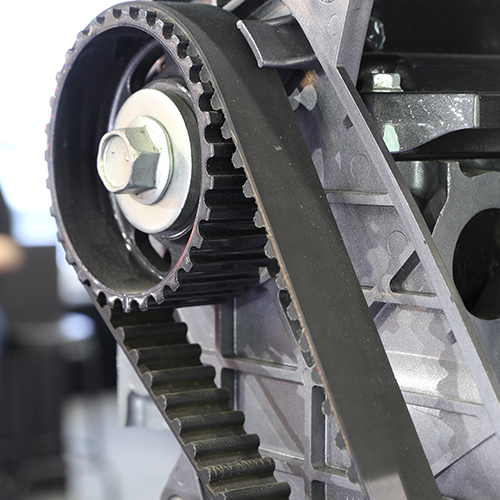
Close-up of a toothed timing belt and pulley assembly on a machine

Once the spark plugs ignite the air/fuel mix: 

  • The explosion pushes the pistons back down.
  • The exhaust valve opens.
  • The spent mixture escapes.
  • The process begins again. 


If the timing belt interval isn’t precise, the pistons and valves may collide instead of working in conjunction, causing your engine to blow out. 


This can be especially serious if your vehicle has an interference engine. In this setup, your valves and pistons occupy the same space on the cylinder but at different times. Timing belt failure in interference engines can destroy the engine beyond repair. 


If you have a non-interference engine, the damage usually isn’t as severe. The pistons and valves aren’t in the same space on the cylinder, so they won’t collide in the event of timing belt failure.


How Long Does a Timing Belt Last?

Timing belts usually last between 60,000 and 100,000 miles. Check your owner’s manual to determine when your manufacturer recommends timing belt maintenance or replacement, as it can vary depending on your vehicle. Your driving conditions and maintenance habits can also affect how long your timing belt lasts. 


Regular inspections at G&G Tire and Automotive can help identify signs of timing belt wear so you don’t risk a complete failure. Our certified mechanics are trained to check the entire system — including the timing belt cover and timing belt pulley — and to check the timing belt tension and look for any timing belt marks that could indicate an impending problem.


Most modern engines use a timing belt, but some older vehicles have timing chains. Either way, our experts can service it.


Signs You May Need a Timing Belt Replacement

Although a timing belt kit isn’t very expensive, the timing belt replacement cost can add up due to the labor involved. However, putting off a timing belt repair can lead to later repairs that are much more expensive. 


If you notice any of the following timing belt symptoms, stop by G&G Tire and Automotive to have it checked out: 

  • Ticking noise: The timing belt operates on a series of pulleys. If it starts to wear out, it won’t operate as smoothly, and you may notice a ticking sound coming from inside your engine. 
  • Engine not turning over:  If your timing belt breaks, your engine won’t be able to turn over or ignite. When you turn the key, the engine might try to start but won’t be able to catch because there’s no combustion.
  • Engine misfires:  Because the timing belt controls when your cylinders open and close, they may misfire if it’s not functioning properly. You’ll recognize this by a stutter or jerk while you’re driving. 
  • Oil leak:  The timing belt cover secures the timing belt near the front of the motor. If the fasteners loosen up over time, oil can leak from this area. 
  • Check engine light:  Since the timing belt is an engine issue, you may notice the check engine light comes on if there’s a problem. 


Bring Your Vehicle to G&G Tire and Automotive for the Best Timing Belt Maintenance Service

G&G Tire and Automotive has been serving the Richmond, MO area since 2019. We’re proud to be a part of the community. We know how important your vehicle is to you and work hard to provide top-notch service at affordable prices.


 If you’re concerned about your timing belt, come see us at 38032 W 94th St., Richmond, MO 64085 or give us a call at (816) 654-2753 to schedule an appointment.

DELETE THIS SECTION


Meta Description: Learn why a timing belt is essential for your vehicle. Discover the best timing belt maintenance and replacement services at G&G Tire and Automotive.


Highlight Description: The timing belt plays an important role in your engine’s combustion. If it fails, it can damage your engine. Learn more about this critical component. 


Keywords: timing belt, engine timing, timing belt replacement, timing belt maintenance, timing belt function, timing belt symptoms, timing belt inspection, timing belt wear, timing belt tension, timing belt failure, timing belt replacement cost, timing belt interval, timing belt cover, timing belt kit, interference engine, non-interference engine, camshaft timing, crankshaft timing, timing belt marks, and timing belt pulley

Engine Timing: Timing Belt Service and Replacement

While you could postpone some vehicle repairs, a timing belt service isn’t one of them. When your vehicle needs a timing belt replacement, you should visit G&G Tire and Automotive and get it done immediately. A timing belt failure can cause partial or total engine damage. That’s why you must know when a timing belt service and replacement is due and have our experienced auto mechanics work on it promptly.
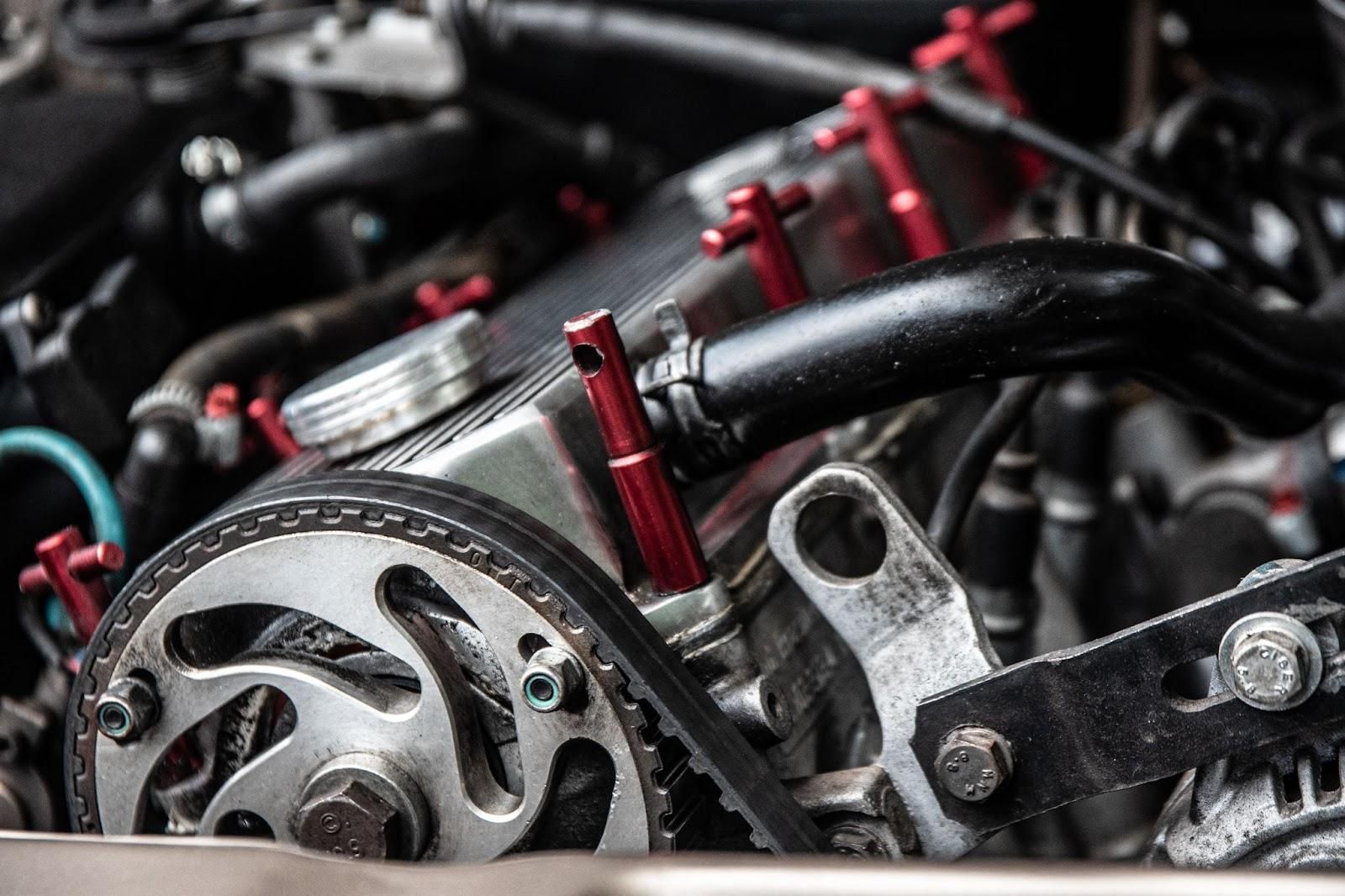
Timing Belt Service at G&G Tire and Automotive in Richmond, MO

What Is a Timing Belt and How Does It Work?

timing belt is a type of engine belt that connects the crankshaft and camshaft of your vehicle’s engine. The crankshaft and the camshaft must coordinate to complete the engine’s combustion cycle synchronously and generate power that turns your vehicle’s wheels. The pistons turn the crankshaft on when they’re pushed up and down by the expansion of compressed air in the combustion chamber. 


The crankshaft turns the linear motion of the pistons into rotational force. This causes the crank sprocket to rotate. Because the timing belt sits on the crank sprocket, it also begins to rotate. As it rotates, it turns on the intake camshaft and the exhaust camshaft. The intake and exhaust camshaft drive the valves that control the flow of air and fuel into the engine’s cylinders. 


This means the timing belt interval must be accurate to ensure the synchronous running of the crankshaft and the camshaft. If there’s a timing belt failure, the crankshaft won’t ignite the camshaft on time. As a result, the camshaft will have issues correctly opening and closing the intake and exhaust valves. 


Then, the vehicle will have an improper fuel and air mixture balance in the combustion chamber. As a result, the piston and the valves will collide at high speeds and cause the engine to blow out. If your vehicle has an interference engine and you're driving at top speed, the damage may be unrepairable. If your vehicle has a non-interference engine, timing belt failure may be less intense, as your valves and pistons cannot collide. 

How Long Should Your Timing Belt Serve You Before Replacement?

Your vehicle’s manufacturer should dictate how often to replace your timing belt. Generally, the recommended service life of a timing belt is seven to 10 years, or after 6,000 to 100,000 miles on the road. However, you may experience early timing belt wear and tear if you haven't previously conducted routine timing belt inspections, or if your vehicle is old. 


A routine timing belt service helps detect issues early. When you bring your vehicle for a timing belt inspection atG&G Tire and Automotive, we’ll do a full-body inspection of all timing belt components. Our experienced mechanics will inspect the timing belt pulley conditions, timing belt tension, and any timing belt marks indicating wear and tear. 

Warning Signs of Timing Belt Failure

If your timing belt functions improperly, you could be in a dangerous situation. Some common warning signs to look for include:

  • Whirring engine noises: If you hear a whirring sound from the engine that increases or decreases when you accelerate and decelerate, it may be caused by a worn-out timing belt. 
  • The engine won’t turn over: If you ignite your vehicle and the engine sputters but fails to start the car, the timing belt may be broken or worn out.
  • Misfiring engine: When your vehicle’s engine misfires, it stutters and jerks as one cylinder fails to fire on time. This may be caused by a defective timing belt that triggers a variance in camshaft timing and crankshaft timing.
  • Oil leaks from the motor front: The timing belt is secured by a timing belt cover fastened by bolts and nuts. Over time, these bolts and nuts become loose, and the motor oil may leak from the engine. 
  • Flashing check engine: Whenever your engine has issues, the check engine light on your vehicle’s dashboard illuminates. If a timing belt failure causes the engine problem, you’ll get a camshaft or crankshaft correlation code.


While most modern vehicles use a timing belt, some use a timing chain. If you're not sure, the mechanics at G&G Tire and Automotive will check it out for you. Just like with other vehicle components, routine inspection and maintenance is the best way to keep your timing belt operating optimally.

Contact G&G Tire and Automotive for Quality Timing Belt Service and Replacement

Since2019G&G Tire and Automotive has been the top auto garage serving vehicle owners in Richmond, MO. When you bring your vehicle in for a timing belt service, we diagnose any timing belt symptoms that may trigger engine problems. We utilize OEM timing belt kits for repair, and our timing belt replacement costs are pocket-friendly.


Visit us at 38032 W 94th St., Richmond, MO 64085. We offer timing belt service and repairs with minimal disruption to your busy schedule.